
Book of Travels Takes a Bold Leap: From Tiny MMO to Mod‑Friendly Solo Adventure
The Kickstarter‑funded MMO Book of Travels is preparing to shut down its live servers in July 2026, but the developers have promised a thoughtful transition rather than an abrupt farewell. Instead of disappearing entirely, the game will be re‑released as a fully offline, single‑player experience that preserves its core narrative, hand‑drawn art, and procedural world‑building systems. Crucially, the studio is opening the doors to modding, offering players official tools to create new quests, characters, and visual assets, thereby extending the life of the beloved title beyond its original online framework.
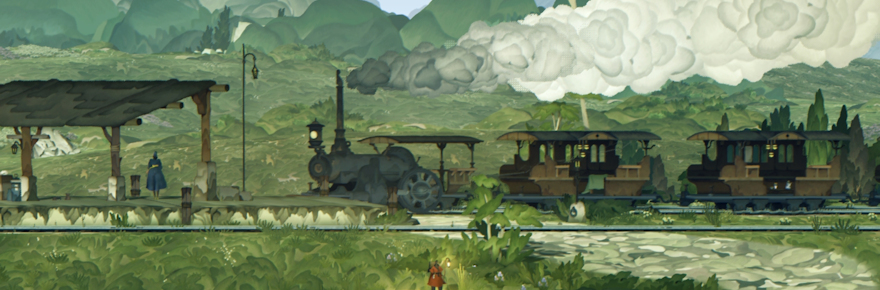
Originally launched in early 2024 after a successful crowdfunding campaign, Book of Travels distinguished itself with a minimalist approach to the MMO formula: a modest player cap, emphasis on exploration and storytelling, and a art style reminiscent of classic storybooks. The game’s world, the Wandering Isle, evolved through seasonal events and player‑driven narratives, cultivating a tight‑knit community that prized cooperation over competition. Despite its charm, sustaining a live service proved challenging for the indie team, prompting the decision to sunset the online component while safeguarding the creative work already invested.
The sunset plan involves a staggered shutdown: live services will cease on July 15, 2026, after which the server binaries will be archived. Players will receive a downloadable offline client that includes all released content up to that point, plus a “Legacy Mode” that lets them revisit past events as standalone scenarios. Simultaneously, the developers will release a modding kit—based on the game’s existing Lua‑based scripting engine and Unity asset pipeline—complete with documentation, sample mods, and a curated workshop hub for sharing creations.
Community reaction has been a mix of nostalgia and optimism. Longtime fans appreciate the chance to continue exploring the Wandering Isle solo or with friends via local LAN, while others see the modding initiative as an opportunity to inject fresh life into the game’s lore. The development team has emphasized transparency, holding regular AMA sessions and providing roadmap updates to ensure that the transition respects both the original vision and the players’ expectations.
The Deep Dive
Converting a live‑service MMO into a stable offline product requires more than simply disabling network code; it demands a careful extraction of server‑side logic, state synchronization, and content delivery mechanisms. For Book of Travels, the team is isolating the procedural generation algorithms that drive the Wandering Isle’s landscapes and embedding them directly into the client. This ensures that the world’s richness persists without relying on external servers. Additionally, all persistent player data—such as character progress, unlocked stories, and acquired items—will be migrated into local save files, with optional cloud backup for those who wish to synchronize across devices.
Modding support is being built on the same foundation that powered the game’s live events. By exposing the event scripting API and providing a robust asset importer, creators can design new narrative branches, custom NPCs, and even alternative art styles. The workshop will feature version control integration, allowing modders to track dependencies and avoid conflicts when combining multiple additions. Early prototypes have already demonstrated the feasibility of adding entirely new regions, hinting at a vibrant post‑sunset ecosystem where community‑generated content could rival the original offering in scope and depth.
Industry Perspective
The decision by Book of Travels to pivot from a live MMO to a mod‑friendly offline title reflects a broader trend among niche online games facing sustainability pressures. As server costs, player retention challenges, and evolving monetization models weigh heavily on small studios, many are exploring hybrid strategies that preserve core experiences while reducing operational overhead. Embracing modding not only extends a game’s lifespan but also cultivates a loyal creator base that can drive organic growth and long‑term engagement.
Industry analysts note that successful transitions like this one hinge on clear communication, robust tooling, and a commitment to honoring the original community’s investment. If executed well, Book of Travels could serve as a case study for how sunsetted MMOs can evolve into enduring solo adventures, inspiring other developers to consider similar paths when live services become untenable. The coming months will reveal whether the modding community embraces the opportunity, potentially transforming a modest Kickstarter project into a lasting cult classic.
Electric Observer Gaming | 2026


 Posts
Posts


0 Comments