
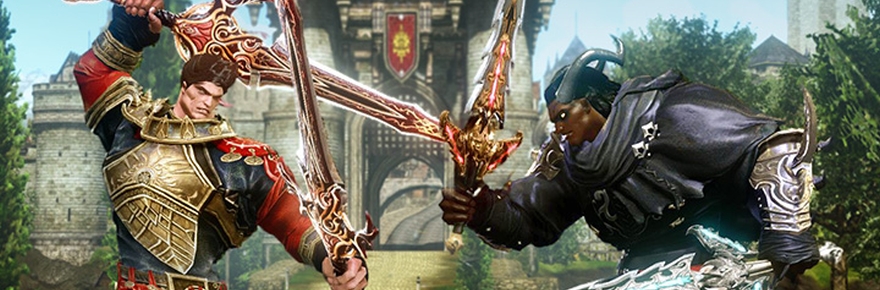
Twin Blades, Double Trouble: Why MMO Players Can’t Quit the Dual-Wielding Fantasy
There’s something primally satisfying about walking into a digital tavern with steel in both hands, and when MassivelyOP posed the question of favorite double-weapon combinations to its community this week, the responses flooded in with the predictable ferocity of a fully geared Combat Rogue—proving that despite decades of evolution in MMORPG design, the allure of dual-wielding remains the genre’s most enduring power fantasy. Full Coverage reveals a fascinating split between purist aesthetics and min-maxing pragmatism, with players defending everything from the classic sword-and-dagger setup to the increasingly popular "spellblade" hybrid loadouts that dominate modern meta-gaming.
The Deep Dive
The obsession with paired weaponry traces directly back to the genre’s tabletop and single-player RPG roots, where dual-wielding represented the ultimate expression of glass-cannon aggression long before World of Warcraft’s Fury Warriors made twin axes iconic. In contemporary MMOs, this mechanical trope has evolved far beyond simple stat multipliers; games like Guild Wars 2 have transformed the concept into positional art forms, where a Thief’s pistol-and-dagger combination demands rhythmic, dance-like movement that single-weapon classes simply cannot replicate. The fantasy sells itself—two blades suggest twice the lethality, a visual language of overwhelming offense that speaks to the lizard-brain satisfaction of topping DPS charts while looking undeniably cool.
Yet the reality of double-weapon systems often betrays this cinematic promise. Developers face the Herculean task of animating distinct attack sequences for main-hand and off-hand strikes while balancing the statistical nightmare of weapon scaling—explaining why so many games, from Elder Scrolls Online to New World, have historically relegated dual-wielding to specific stamina-based DPS builds rather than allowing true hybridization. The "meta" often crystallizes around specific pairings not because they look cool, but because off-hand weapon procs and passive bonuses create mathematical synergies that min-maxers exploit, turning the romantic image of the dual-wielding berserker into a spreadsheet optimization puzzle where the second weapon serves more as a stat-stick than a functional tool of destruction.
Industry Perspective
From a development standpoint, supporting robust dual-wielding systems represents one of the most resource-intensive mechanical commitments an MMO studio can make, requiring unique animation rigs, hit-box calculations, and particle effects that single-weapon classes need not consider. This explains why sandbox titles like Albion Online—which just previewed its cross-progression systems ahead of next week’s Xbox X|S launch—have leaned into weapon-pairing as a core economic driver, with each hand potentially wielding gear from entirely different crafting trees that must sync across platforms. Meanwhile, throwback projects like Pantheon: Rise of the Fallen, currently showcasing mundane but crucial systems like its upcoming mail feature, suggest a return to classical equipment constraints where dual-wielding may carry heavier statistical trade-offs than modern audiences expect, potentially reviving the "off-hand penalty" mechanics that contemporary design has largely abandoned.
The industry’s trajectory suggests we’re moving beyond simple "two of the same sword" paradigms toward asymmetrical loadouts that blend melee and ranged capabilities—think Star Citizen’s recently teased crafting features allowing for modular weapon modifications that could theoretically support mixed pistol-and-blade configurations. This evolution reflects a broader design philosophy where player agency trumps traditional class archetypes, though it introduces fresh balance nightmares for encounter designers. When every player can potentially mix a shield-breaking mace with a spell-casting focus, the traditional tank-healer-DPS trinity begins to fracture, forcing developers to engineer boss mechanics that account for unprecedented build diversity while maintaining the accessibility needed for controller-based playstyles entering the ecosystem through console launches.
Ultimately, the persistence of dual-wielding popularity speaks to a fundamental truth about MMO player psychology: we crave visual feedback that validates our power progression. A single greatsword may deal comparable damage on paper, but the staccato rhythm of twin blades connecting with enemy armor delivers dopamine hits that slower weapons cannot match. Whether players are flocking to RuneScape’s October RuneFest to debate the latest dual-wielding meta changes or theory-crafting in Heroes of Might and Magic Olden Era’s April stress test, the message to developers remains clear—give us two weapons, or give us death, but never ask us to choose just one.
As the genre continues its fragmentation into specialized niches—from the hardcore survival mechanics of upcoming sandboxes to the streamlined accessibility pushes like Albion’s console debut—the double-weapon combo stands as the great equalizer. It remains the definitive statement of aggressive intent, a mechanical choice that says, "I came here to deal damage, not to tank hits or heal allies." And as long as MMOs continue to measure success in damage-per-second meters, players will keep answering MassivelyOP’s question with the same resounding verdict: two weapons are always better than one.
Electric Observer Gaming | 2026


 Posts
Posts


0 Comments