
Tech | Source: Arstechnica
US Law Enforcement Warns of "Anti-Tech Extremism" as AI Hatred Grows As concerns about AI job replacement and tech industry influence escalate, federal agencies are now targeting a new category of domestic threat: individuals and groups deemed "anti-technology extremists," sparking debates about surveillance, free speech, and the boundaries of extremism.
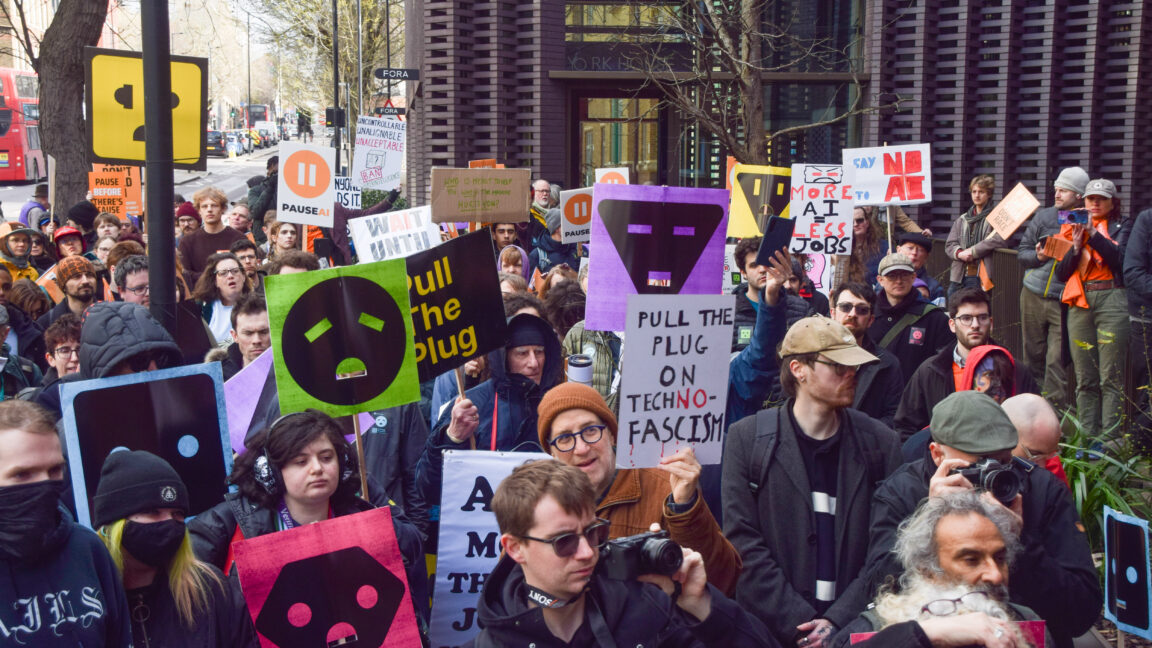
The warning signs have been accumulating for some time, with a string of attacks on tech CEOs, nationwide protests targeting data centers, and a growing chorus of voices expressing anxiety about the impact of artificial intelligence on employment. In response, federal intelligence agencies and domestic law enforcement have begun to circulate reports highlighting the emergence of a new domestic threat: anti-technology extremists. These reports, totaling over 1,000 pages and obtained by WIRED, reveal a national shift in focus towards surveilling individuals and activities deemed to be part of this broad and worryingly vague category.
The effort to target anti-technology extremists follows President Donald Trump's National Security Presidential Memo 7, which instructs the Department of Justice to target anyone holding "anti-American," "anti-Christian," and "anti-capitalism" beliefs. This memo has been criticized for its potential to infringe upon free speech and stifle dissent, and the new focus on anti-technology extremism has raised similar concerns. Earlier this month, Trump's counterterrorism czar, Sebastian Gorka, released a public counterterrorism strategy claiming that left-wing extremists are one of the three top counterterrorism priorities facing the United States, further fueling worries about the scope of the government's surveillance efforts.
The reports obtained by WIRED provide a glimpse into the government's thinking on anti-technology extremism, highlighting a range of activities and ideologies deemed to be part of this emerging threat. From protests against data centers to online forums discussing the potential dangers of AI, the net cast by federal agencies appears to be wide and inclusive, sparking fears that legitimate dissent and free speech may be caught in the crosshairs. As the government's surveillance efforts expand to encompass this new category of threat, questions are being raised about the potential for abuse and the impact on civil liberties.
The growth of anti-technology sentiment is undeniable, with many Americans expressing concerns about the influence of the tech industry and the impact of AI on employment. However, the government's response to this sentiment has been criticized for its potential to stifle legitimate debate and dissent. By targeting anti-technology extremists, federal agencies may be creating a self-fulfilling prophecy, driving those who are critical of the tech industry underground and fueling further radicalization.
As the debate over anti-technology extremism continues to unfold, it is essential to consider the potential consequences of the government's surveillance efforts. Will the targeting of anti-technology extremists lead to a more nuanced understanding of the complex issues surrounding the tech industry, or will it simply serve to further polarize an already divided society? As the government seeks to navigate the complexities of this emerging threat, it must be careful to balance its efforts to maintain public safety with the need to protect free speech and civil liberties.
In the end, the warning from US law enforcement about anti-technology extremism serves as a reminder of the complex and often fraught relationship between technology, society, and government. As AI continues to reshape the world around us, it is essential to engage in open and honest discussions about the potential benefits and drawbacks of this technology, rather than simply relying on surveillance and repression to manage dissent. By doing so, we can work towards creating a more just and equitable society, where the benefits of technology are shared by all, and the risks are mitigated through careful consideration and planning.


 Posts
Posts




0 Comments